

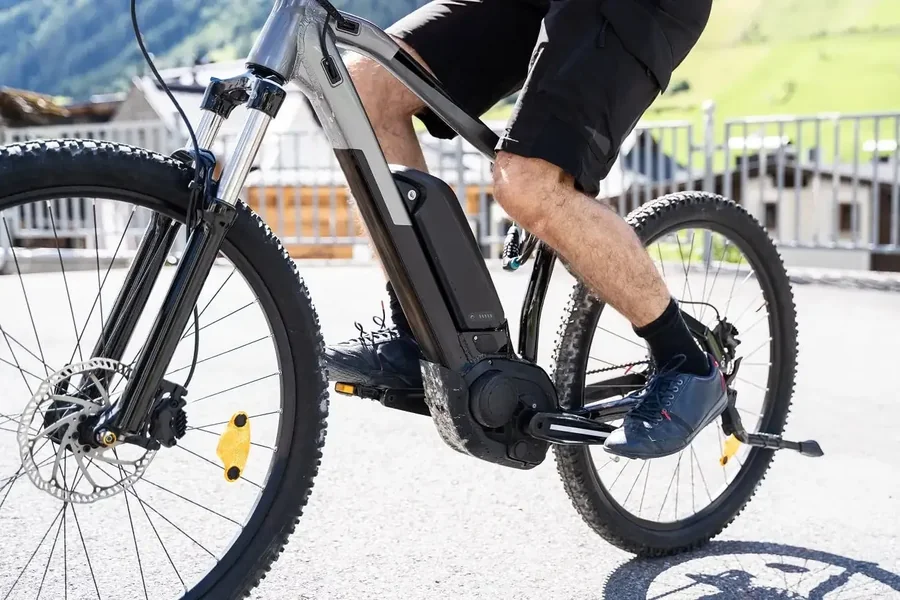
Battery capacity represents the most decisive—yet frequently misunderstood—component when selecting an electric mountain bike. While marketing materials often emphasize motor power and suspension travel, the battery system fundamentally determines ride duration, range capability, and long-term ownership satisfaction. This comprehensive analysis provides a systematic approach to battery capacity selection, moving beyond simplistic “bigger is better” recommendations to establish capacity requirements precisely aligned with individual riding patterns, terrain characteristics, and performance expectations.
Understanding Watt-Hours: The Foundation of Informed Decisions
Battery capacity expressed in watt-hours (Wh) provides the critical metric for meaningful comparison:
Capacity Framework: Current market offerings typically range from 250Wh to 900Wh, with distinct performance implications:
- Entry-level systems (250-350Wh): Suitable for limited recreational use
- Mid-range systems (400-625Wh): The sweet spot for most recreational riders
- Extended-range systems (630-900Wh): Necessary for all-day adventures or extreme terrain
When evaluating options like the best electric mountain bike under $2000, understanding how capacity translates to real-world performance allows informed decisions balancing cost constraints against range requirements.
Calculating Personal Range Requirements: Beyond Manufacturer Claims
Manufacturer range estimates typically reflect optimal conditions, creating unrealistic expectations. Develop personalized estimations through systematic analysis:
Base Range Calculation Formula: Range (miles) = (Battery capacity in Wh × Efficiency factor) ÷ (Energy consumption per mile)
Critical Variables Influencing Consumption:
- Rider Weight Impact: Each additional 20 pounds increases consumption by approximately 7-9%
- Elevation Factor: Every 1,000 feet of climbing reduces range by 15-20% from flat-terrain estimates
- Assistance Level Effect: Maximum assistance typically reduces range by 40-60% compared to eco modes
- Temperature Influence: Performance degradation of 10-15% occurs below 40°F
- Tire Selection Impact: Plus-sized tires increase rolling resistance, reducing range by 8-12%
Application Example:
- Base scenario: 500Wh battery with 85% efficiency factor and baseline consumption of 15Wh/mile
- Expected range: (500 × 0.85) ÷ 15 = 28.3 miles
- With adjustments: 160lb rider (neutral), 2,000ft elevation gain (-30%), moderate assistance (-20%), 60°F temperature (neutral), standard tires (neutral)
- Adjusted range: 28.3 × 0.7 × 0.8 = 15.8 miles
This calculation provides significantly more accurate expectations than manufacturer claims, enabling appropriate capacity selection based on typical riding patterns.
Weight-Capacity Relationship: The Critical Balance
Battery systems represent the heaviest single component on electric mountain bikes, creating a critical relationship between capacity and handling characteristics:
Weight Impact Analysis:
- Standard lithium battery density: approximately 0.45-0.55 lb/100Wh
- Supporting structure weight: 0.15-0.25 lb/100Wh
- Total system impact: 0.6-0.8 lb/100Wh
Performance Implications:
- Handling Dynamics: Each additional pound of battery weight influences:
- Suspension performance (increased unsprung weight)
- Cornering responsiveness (higher center of gravity)
- Technical terrain navigation (increased momentum in direction changes)
- Physical Handling: For riders who occasionally transport bicycles manually:
- Lifting threshold: Most adults find bicycles exceeding 50 pounds impractical for regular lifting
- Transportation considerations: Vehicle rack weight limitations typically range from 40-65 pounds per position
For those prioritizing agility over maximum range, the lightest electric mountain bike options with optimized capacity-to-weight ratios offer compelling alternatives despite potential range limitations.
Usage Pattern Analysis: Matching Capacity to Actual Requirements
Different riding styles create distinct battery demand profiles. Identify personal patterns through honest assessment:
Riding Style Categories:
- Trail Explorer: Primarily singletracks with moderate elevation gain
- Typical ride: 12-18 miles, 1,000-1,500ft elevation
- Recommended capacity: 400-500Wh
- Endurance Adventurer: Extended backcountry routes
- Typical ride: 25-40 miles, 2,500-4,000ft elevation
- Recommended capacity: 625-750Wh
- Technical Specialist: Advanced terrain with significant features
- Typical ride: 8-15 miles, high assistance requirement
- Recommended capacity: 500-625Wh
- Elevation Maximizer: Primarily focused on climbing/descending
- Typical ride: Heavy climbing assistance, minimal flat sections
- Recommended capacity: 625-750Wh
Honest assessment of actual usage patterns—rather than aspirational assumptions—leads to more appropriate capacity selection and improved ownership satisfaction.
Range Extension Strategies: Optimizing Available Capacity
Implementation of specific riding techniques can significantly extend range without capacity increases:
Efficiency Maximization Techniques:
- Cadence Optimization: Maintaining 75-85 RPM cadence improves motor efficiency by 12-18%
- Terrain-Based Mode Selection: Implementing strategic assistance reduction on flat sections preserves capacity for climbs
- Momentum Conservation: Utilizing downhill sections to regenerate or preserve energy through reduced assistance
- Temperature Management: Protecting batteries from extreme cold through insulated covers increases available capacity by 8-12% in winter conditions
Implementation Example:
- Base scenario: 500Wh battery with projected 20-mile range
- With efficiency techniques: Extended range to 26-30 miles (30-50% improvement)
- Practical impact: Potentially eliminating the need for the next capacity level with associated weight penalty
Future-Proofing Considerations: The Upgrade Pathway
Battery technology continues advancing rapidly, creating upgrade considerations beyond initial capacity selection:
Forward Compatibility Factors:
- Mounting System Standardization: Selecting bicycles with industry-standard mounting interfaces enables future upgrades
- Voltage Compatibility: Ensuring controller systems accommodate potential voltage increases in future battery generations
- Diagnostic Capabilities: Systems with sophisticated BMS monitoring facilitate optimal long-term battery management
Strategic Purchase Approach:
- If budget-constrained: Prioritize quality frame/motor with upgrade pathway over maximum initial capacity
- If maximum versatility required: Select systems with external or modular battery options enabling capacity adaptation
Conclusion: The Personalized Approach
Battery capacity selection represents perhaps the most consequential decision in the electric mountain bike purchase process. By moving beyond simplistic “maximum capacity” recommendations toward personalized analysis incorporating individual riding patterns, terrain characteristics, and physical handling preferences, riders can identify optimal capacity needs.
This systematic approach enables informed decision-making balancing the competing priorities of range capability, handling dynamics, and budget constraints—ultimately creating a more satisfying ownership experience aligned with actual rather than perceived requirements. The ideal capacity isn’t necessarily the maximum available, but rather the optimal balance point between sufficient range and unnecessary weight for each rider’s specific circumstances.
