

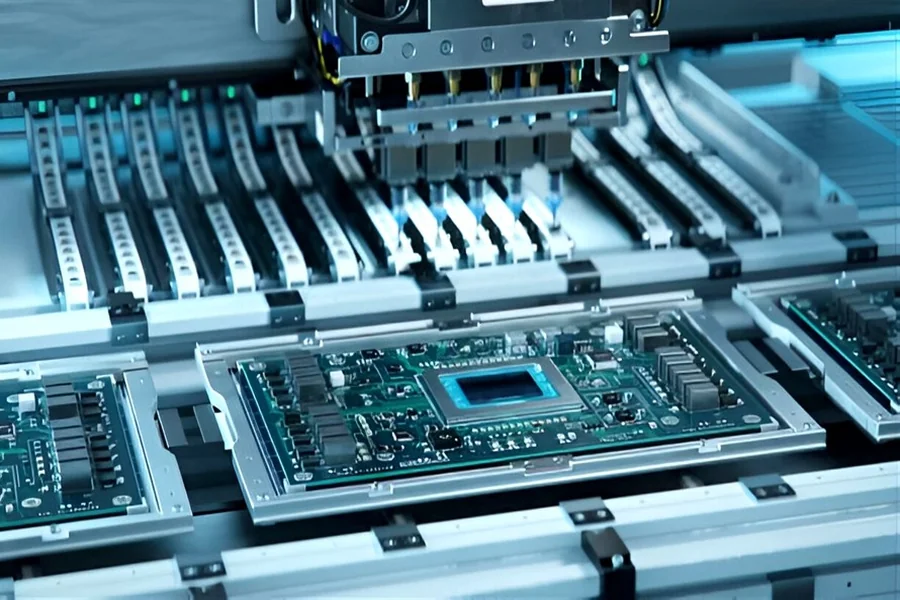
Through hole PCB assembly is a classic yet crucial method in electronic manufacturing, where components are inserted into drilled holes on a printed circuit board and soldered to the opposite side. Unlike surface mount technology (SMT), which mounts components directly onto the PCB surface, through hole assembly provides stronger mechanical bonds, making it ideal for applications that endure mechanical stress, high temperatures, or heavy currents.
This assembly technique has been used for decades and remains a preferred choice in aerospace, industrial control systems, power electronics, and automotive applications. Through hole PCBs support larger and heavier components like connectors, transformers, and high-power resistors, which require robust solder joints for long-term reliability.
Structure and Design of Through Hole PCBs
Through hole PCBs feature pre-drilled holes lined with conductive material, typically copper, which allows for electrical connections between the top and bottom layers of the board. The components’ leads pass through these holes and are soldered to pads on the opposite side, creating both electrical and mechanical connections.
Designing a through hole PCB involves careful planning of hole size, pad layout, and component placement to ensure proper connectivity and minimize electrical interference. While through hole assembly can be more labor-intensive than SMT, it offers superior durability, which is why it remains relevant for mission-critical electronics.
Advantages of Through Hole PCB Assembly
Mechanical Strength
Through hole components are anchored firmly to the PCB, providing excellent resistance to mechanical stress and vibration. This makes them suitable for industrial machinery, automotive electronics, and military applications.
High Power Handling
Components such as large capacitors and power transistors can be securely mounted using through hole assembly, allowing the PCB to handle higher currents and voltages compared to SMT-only designs.
Reliability in Harsh Environments
The soldered leads provide stable electrical connections, ensuring consistent performance even under extreme temperature fluctuations, high humidity, or heavy mechanical load.
Ease of Prototyping
Through hole PCBs are simpler to assemble manually, making them ideal for prototyping, small-batch production, and educational projects. Engineers can easily insert and replace components during testing and development.
The Through Hole PCB Assembly Process
1. Design and Layout
The assembly process begins with the schematic design, where engineers plan the placement of components and routing of electrical connections. The design also considers hole size, pad spacing, and component orientation to facilitate accurate assembly.
2. Drilling and Plating
Once the design is finalized, holes are drilled into the PCB, and through hole plating is applied to ensure electrical conductivity between layers. This step is critical for maintaining reliable connections, especially in multi-layer PCBs.
3. Component Insertion
Components with leads are inserted into the pre-drilled holes. Automated insertion machines can place thousands of components per hour, while manual insertion is still common for prototypes or low-volume production.
4. Soldering
Through hole soldering can be done using wave soldering for mass production or manual soldering for small batches. Wave soldering involves passing the PCB over a wave of molten solder, ensuring all components are soldered simultaneously. This process ensures strong mechanical and electrical bonds.
5. Inspection and Testing
After soldering, thorough inspection is performed using automated optical inspection (AOI) or X-ray inspection to detect soldering defects, misaligned components, or short circuits. Functional testing ensures the assembled PCB performs according to specifications.
Applications of Through Hole PCB Assembly
Through hole PCB assembly is widely used in industries where reliability, durability, and power handling are critical:
- Industrial Automation: Controllers, power supplies, and sensors often use through hole PCBs for robust operation.
- Aerospace and Defense: Military-grade electronics require mechanical stability and resistance to environmental stress, making through hole assembly ideal.
- Automotive Electronics: High-power modules, connectors, and control units rely on the mechanical strength of through hole components.
- Consumer Electronics: Although SMT dominates, some devices still incorporate through hole components for connectors and switches.
- Medical Equipment: Devices like diagnostic machines and therapeutic instruments benefit from the stability and reliability of through hole PCBs.
Challenges and Considerations
While through hole PCB assembly offers significant advantages, it also comes with certain challenges. It requires more space than SMT, limiting circuit density. The process can be slower and more labor-intensive, particularly for high-volume production. Additionally, designing multi-layer through hole PCBs requires careful planning to ensure proper connectivity and thermal management.
Future of Through Hole PCB Assembly
Despite the growing dominance of SMT, through hole assembly continues to be relevant for applications that demand durability and high reliability. Modern hybrid PCBs often combine through hole and SMT technologies to achieve both high component density and mechanical strength. Advances in automated insertion and soldering equipment also improve efficiency, making through hole assembly viable for medium to large-scale production.
Partnering with the Right Experts
Choosing a reliable partner for through hole PCB assembly is crucial to ensure quality, efficiency, and cost-effectiveness. Collaborating with a professional Chinese PCBA provider allows businesses to access advanced manufacturing technologies, skilled engineers, and comprehensive testing services. This ensures that every through hole PCB assembly meets stringent industry standards and delivers long-term performance for critical applications.
