

Introduction: Finance at a Crossroads
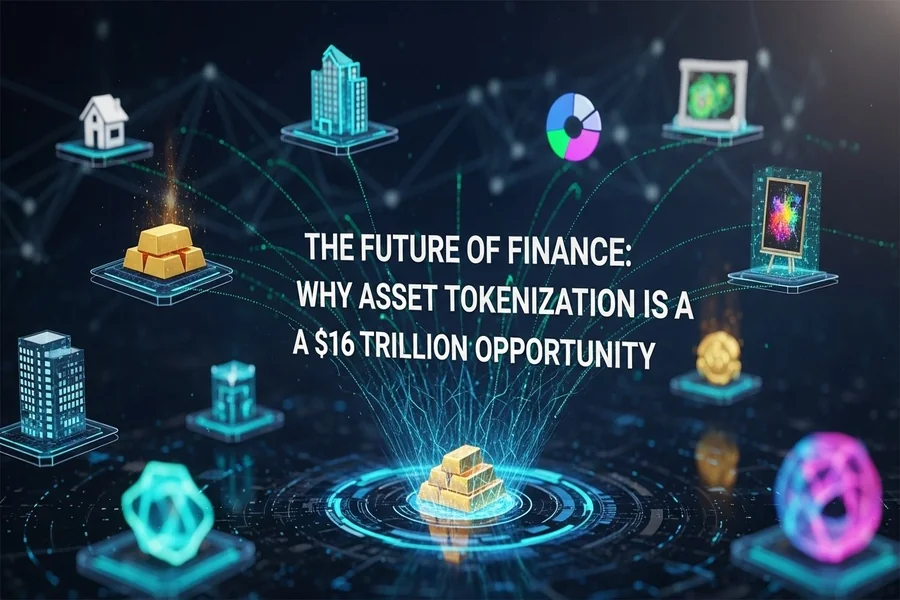
Global finance is entering a new era where traditional barriers of entry are breaking down. According to Boston Consulting Group (BCG), asset tokenization could unlock a $16 trillion market by 2030, equal to about 10% of global GDP. Meanwhile, financial asset tokenization powered by platforms like Hyperledger Fabric is reshaping how real estate, bonds, commodities, and even art are traded, owned, and managed.
This seismic shift is driven by blockchain technology, which introduces transparency, efficiency, and fractional ownership to historically illiquid and complex markets. As we look toward the future, tokenization isn’t just a buzzword—it’s set to become the backbone of digital finance.
What Is Asset Tokenization?
At its core, asset tokenization is the process of converting real-world assets into digital tokens stored on a blockchain. Each token represents ownership (or a share) of the underlying asset, whether that’s a piece of property, a corporate bond, or a work of art.
Core features of tokenization:
- Fractional Ownership: High-value assets can be split into affordable digital shares.
- Liquidity: Illiquid assets become tradeable on secondary markets.
- Transparency: Blockchain ensures immutable, auditable records.
- Efficiency: Smart contracts cut intermediaries and transaction costs.
By integrating financial asset tokenization with blockchain, enterprises and investors alike gain faster access to capital, better compliance, and a democratized investment landscape.
Why Asset Tokenization Is the Future of Finance
1. Liquidity for Traditionally Illiquid Assets
Assets like real estate, private equity, and fine art are notoriously illiquid. Tokenization unlocks liquidity by dividing ownership into digital tokens that can be traded on marketplaces.
Stat: The global real estate market alone is worth $326 trillion (Savills, 2022). Tokenizing even 1% of this would represent a $3.26 trillion opportunity.
2. Democratizing Access to Investments
Traditionally, high-value assets were reserved for ultra-wealthy individuals or institutions. Tokenization lowers entry barriers by enabling fractional ownership. For example, instead of needing millions to buy property, an investor could purchase $500 worth of real estate tokens.
3. Efficiency and Reduced Costs
Smart contracts automate compliance, settlement, and payment distribution. PwC estimates blockchain can reduce compliance costs by up to 30%.
4. Transparency and Trust
All transactions are stored on the blockchain, providing an immutable audit trail. For industries plagued by fraud, this transparency enhances trust between stakeholders.
Hyperledger Fabric: Enabling Enterprise-Grade Tokenization
While public blockchains like Ethereum laid the foundation, enterprises require permissioned, scalable, and compliant systems. That’s where Hyperledger Fabric comes in.
Why Fabric powers financial asset tokenization:
- Permissioned Access → Only verified parties can participate, ensuring security.
- Scalability → Handles thousands of transactions per second.
- Privacy → Supports confidential channels for sensitive financial agreements.
- Smart Contracts (Chaincode) → Automate complex processes such as dividend payments, compliance checks, or bond settlements.
With these features, Hyperledger Fabric provides the infrastructure to take tokenization from concept to large-scale financial adoption.
Key Sectors Driving Tokenization Growth
Real Estate Tokenization
- Market value: $326 trillion
- Tokenization Benefit: Unlocks liquidity and lowers entry barriers.
- Example: Investors can trade fractions of commercial real estate worldwide.
Bond Tokenization
- Market size: $133 trillion (SIFMA, 2023).
- Tokenization Benefit: Automates interest payments and real-time settlements.
- Example: The European Investment Bank issued a €100 million digital bond on Ethereum in 2021.
Commodities Tokenization
- From gold to coffee, commodities can be tokenized for easy trading.
- Example: Paxos Gold (PAXG) represents tokenized gold backed by physical reserves.
Private Equity and Funds
- Tokenization democratizes access to venture capital and hedge funds.
- Smaller investors gain entry into once-exclusive markets.
Art and Collectibles
- Platforms already allow fractional ownership of Picasso or Banksy artworks.
- Democratizes luxury asset investment.
Market Potential: The $16 Trillion Question
The numbers highlight why tokenization is a $16 trillion opportunity:
- $16 trillion in tokenized assets by 2030 (BCG).
- 40% of institutional investors are actively exploring blockchain adoption (Fidelity Digital Assets).
- 73% of consumers are willing to pay more for brands offering transparency (Nielsen)—a huge driver for tokenized, verifiable assets.
These stats prove that tokenization is not a trend but a long-term financial transformation.
Challenges to Overcome
Like any disruptive innovation, tokenization faces hurdles:
- Regulatory Ambiguity: Legal frameworks differ across regions.
- Technology Integration: Legacy financial systems must adapt to blockchain.
- Liquidity Risk: Secondary markets for tokenized assets are still developing.
Emerging Solutions
- Governments are building regulatory sandboxes for experimentation.
- Platforms using Hyperledger Fabric integrate tokenization with existing ERP and financial systems.
- Partnerships between fintechs, banks, and regulators accelerate adoption.
FAQs on Asset Tokenization
Q1. What is financial asset tokenization?
It’s the process of converting financial instruments like bonds, equities, or real estate into blockchain-based digital tokens.
Q2. Why is tokenization important?
Because it provides liquidity, transparency, and accessibility for markets that were traditionally limited to wealthy investors.
Q3. Is Hyperledger Fabric better than public blockchains?
For enterprises, yes. Fabric offers permissioned access, scalability, and privacy, making it ideal for regulated financial environments.
Q4. What assets can be tokenized?
Real estate, bonds, commodities, private equity, art, and intellectual property are all tokenizable.
Q5. What’s the market size for tokenization?
By 2030, tokenized assets could represent $16 trillion globally.
Wrapping Up: The New Financial Era
The future of finance is undeniably tokenized. With financial asset tokenization, powered by Hyperledger Fabric, industries can unlock unprecedented liquidity, democratize access, and boost transparency.
From $326 trillion in real estate to $133 trillion in bonds, even fractional adoption could create multi-trillion-dollar opportunities. While regulatory and technological challenges remain, the momentum is clear: tokenization is the $16 trillion opportunity shaping the future of global finance.
As investors, enterprises, and governments embrace this shift, tokenization will no longer be an alternative—it will be the standard.
